Thank you. Together we collected
94 kg of WEEE
On 9 May 2026, 7 households at Via Plinio dropped off 94 kilograms of electronic waste. The second RecoServ pilot in Milan. Thanks to proximity collection, every kg was correctly sent to recycling.
The impact in numbers
Inside those 94 kg
What was collected and what will be recovered.
Composition by category
Via Plinio 18 · CDC WEEE groupings · weight in kg
- R4 – Small app./IT69.6%
- R3 – TVs/Monitors29.7%
- R5 – Light sources0.7%
- Batteries0.1%
Recoverable raw materials
Estimated average composition · WEEE Forum coefficients
- Iron/Steel23.4%
- Plastics28.4%
- Glass/Panels11.5%
- Copper11.9%
- Aluminium10.8%
- Precious metals0.2%
- Other13.9%
Estimate based on average composition per WEEE category. Not a substitute for certified laboratory analysis.
avg. weight 0.49 kg/pc
the highest across RecoServ pilots
of precious metals estimated as recoverable
What was in those drawers
Almost 70% of the weight was R4: 134 small devices including smartphones, chargers, headphones and appliances. A single television contributed 28 kg of R3. None of them belong in general waste.
134 small R4 devices, averaging 0.49 kg each. Alone, none of them justifies a trip to the civic amenity site. Together, they weigh 66 kg.
What residents say
Two in-depth conversations during the drop-off. Fewer than in the first pilot, but denser: both touch on the deep reasons why disposal had been delayed.
1 of 2 structured feedbacks names the car as a de-facto prerequisite to reach the civic amenity site.
1 of 2 structured feedbacks blocks the drop-off until personal data can be wiped.
Both structured feedbacks express immediate willingness to use a permanent bin in the building.
Both would come back to the next collection, or as soon as the data wipe is solved.
Karl has been hoarding for years: without a car, the civic amenity site is not an option. He would use a Smart Bin in the building without hesitation.
The barrier isn't environmental awareness, it's mobility. For those without a car, proximity collection is the only real way.
A resident has tablets and phones ready to drop off, but wants to wipe his data first. He thought removing the SIM card was enough.
Two operational gaps: clear data-wipe instructions are needed, and information that something is still WEEE even without a memory card.
The second feedback identifies a specific barrier the service can remove: provide simple data-wipe instructions, or offer an on-site data-wipe service during collection. The resident has more devices ready and will come back.
avoided thanks to correct recycling
What the two pilots say together
Plinio beats Vanvitelli on participation (more advance notice), but Vanvitelli generated more material per participant (accumulated-stock effect in a larger building).
| Metric | Pilot #1 Vanvitelli | Pilot #2 Plinio |
|---|---|---|
| Date | 18 Apr 2026 | 9 May 2026 |
| Participants | 10 | 7 |
| Participation rate | 18.5% | 22.6% |
| kg / dwelling | 3.32 kg | 3.04 kg |
| Total kg | 179.22 kg | 94.35 kg |
| kg / participant | 17.92 kg | 13.48 kg |
| CDC WEEE estimate | €57.46 | €28.72 |
| CO₂eq avoided | 589 kg | 280 kg |
| Dominant category | R3 (57.9%) | R4 (69.6%) |
| CUMULATIVE TOTAL · 17 households · 273 kg · €86 · 869 kg CO₂eq | ||
Two Milan buildings. 17 households. 273 kilograms of WEEE correctly sent to recycling. The pattern is consistent: the material had been sitting at home for years. Proximity did the rest.
The material does not stop here
Each drop-off was weighed by CDC WEEE category and logged into the system at the point of collection.
WEEE collected at the Via Plinio pilot was delivered to the Via Olgettina civic amenity site (Milan), an authorised plant in the municipal circuit.
Metals, plastics and components are separated and put back into the production cycle. Copper, aluminium, lithium: nothing is lost.
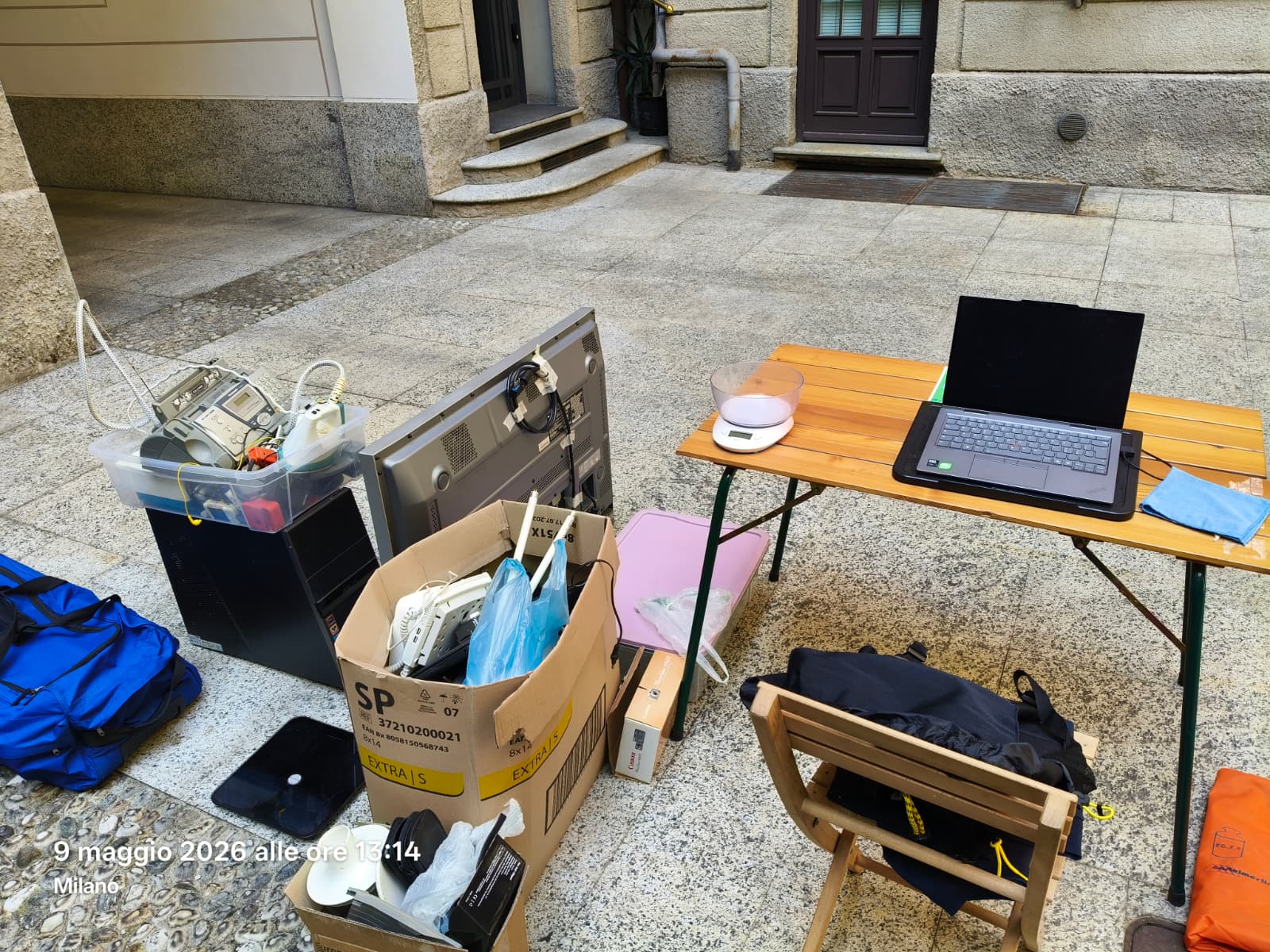
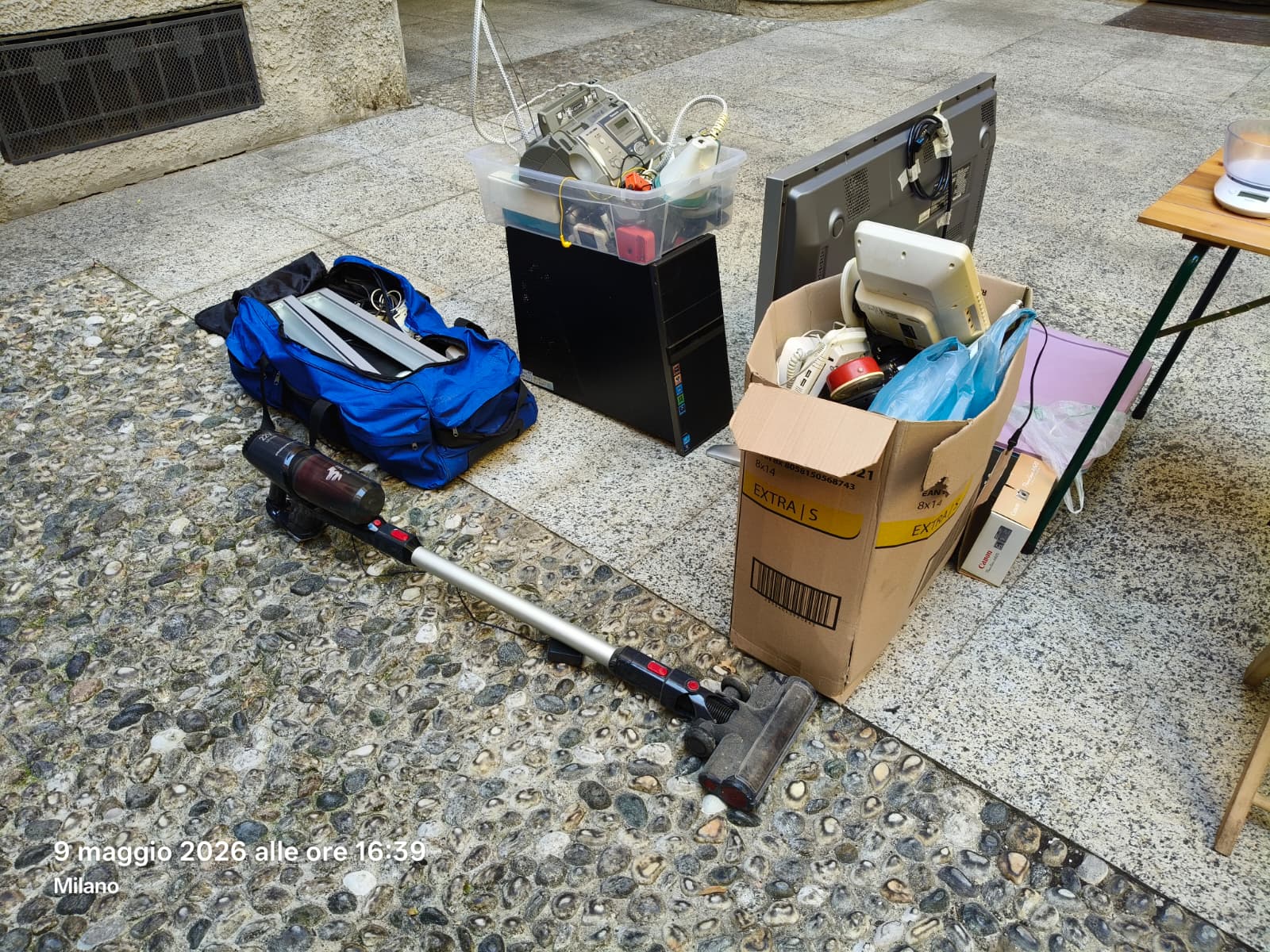
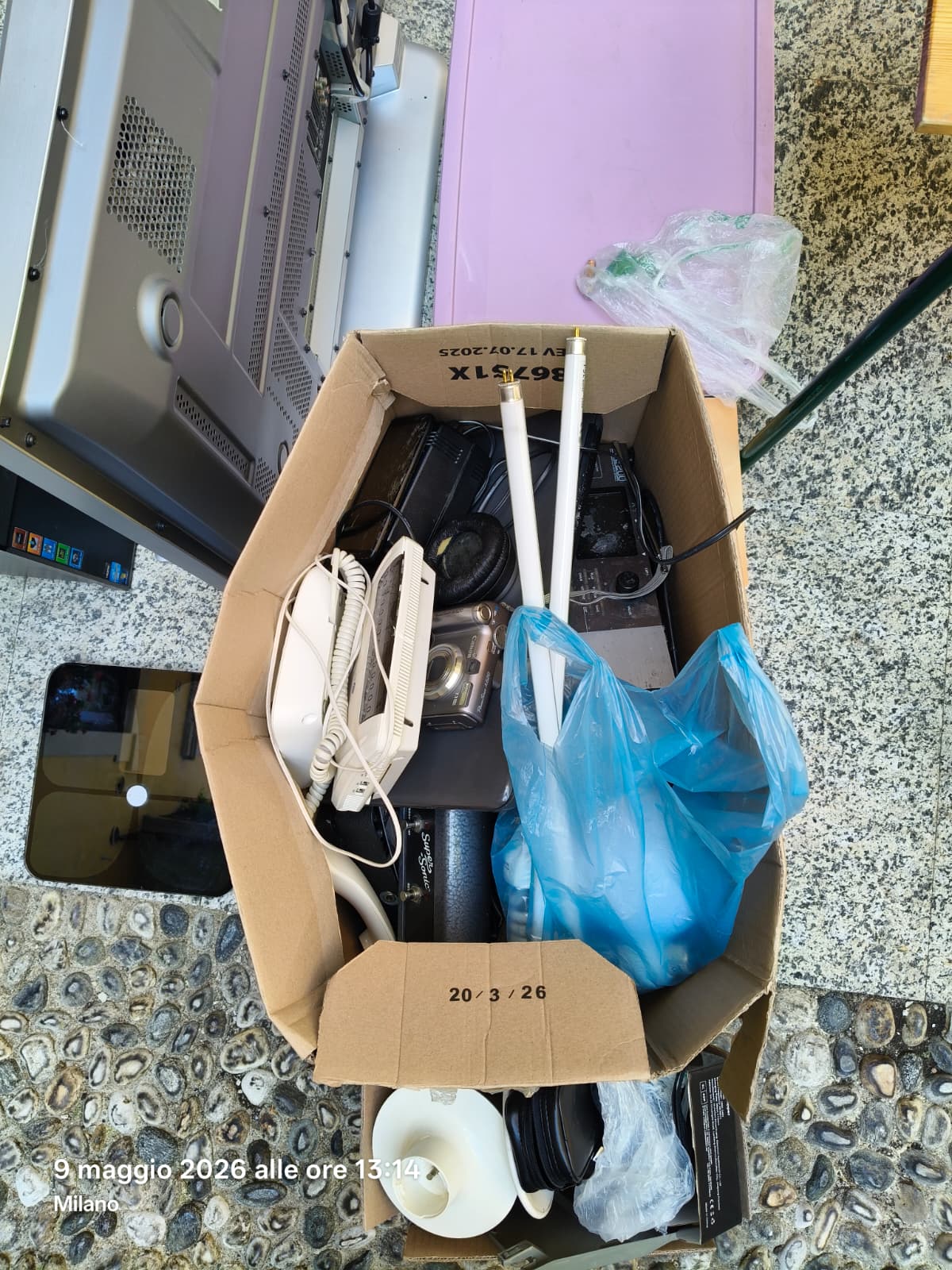
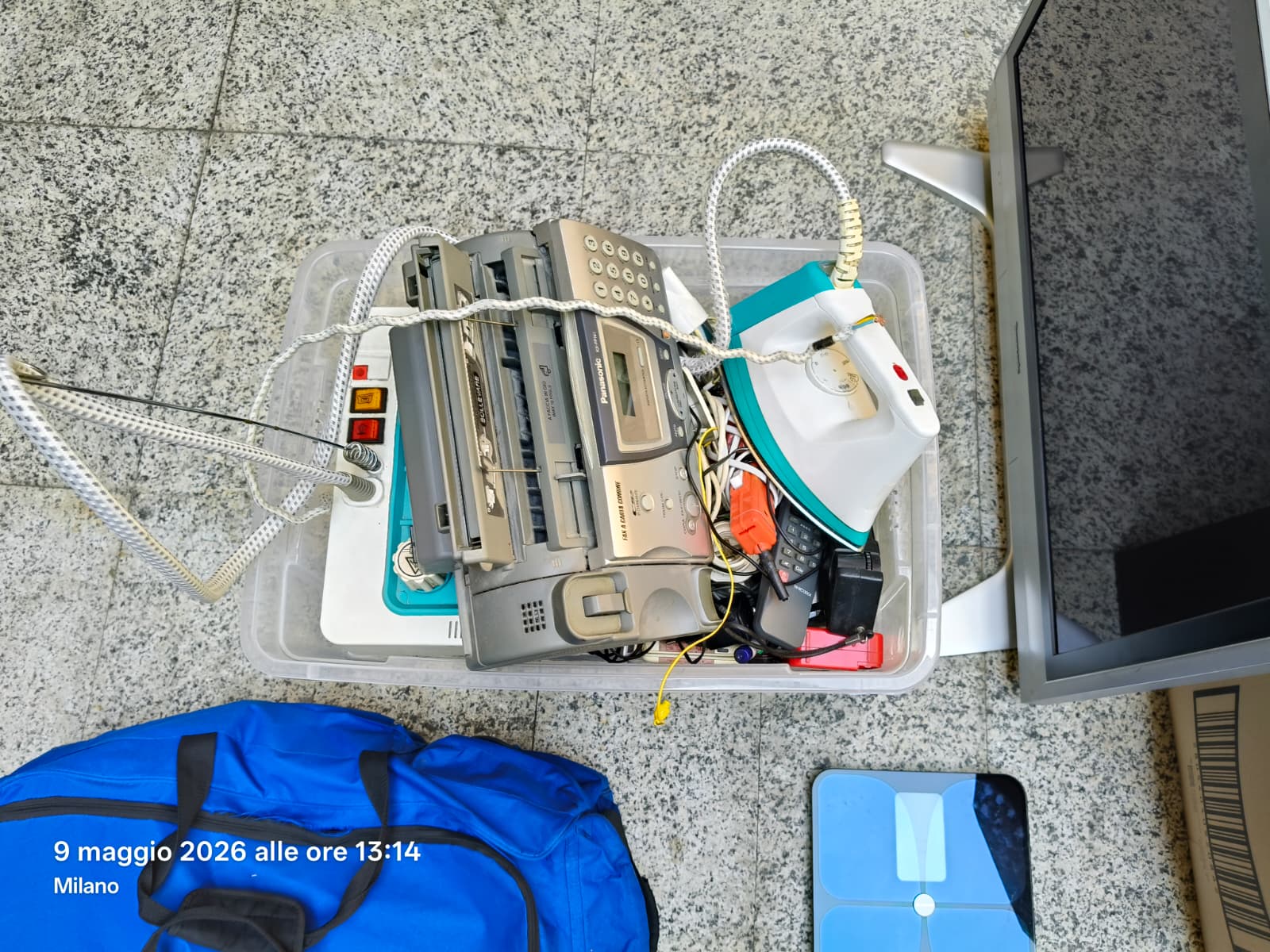
Images from the collection
A selection of images taken during the Via Plinio 18 collection.
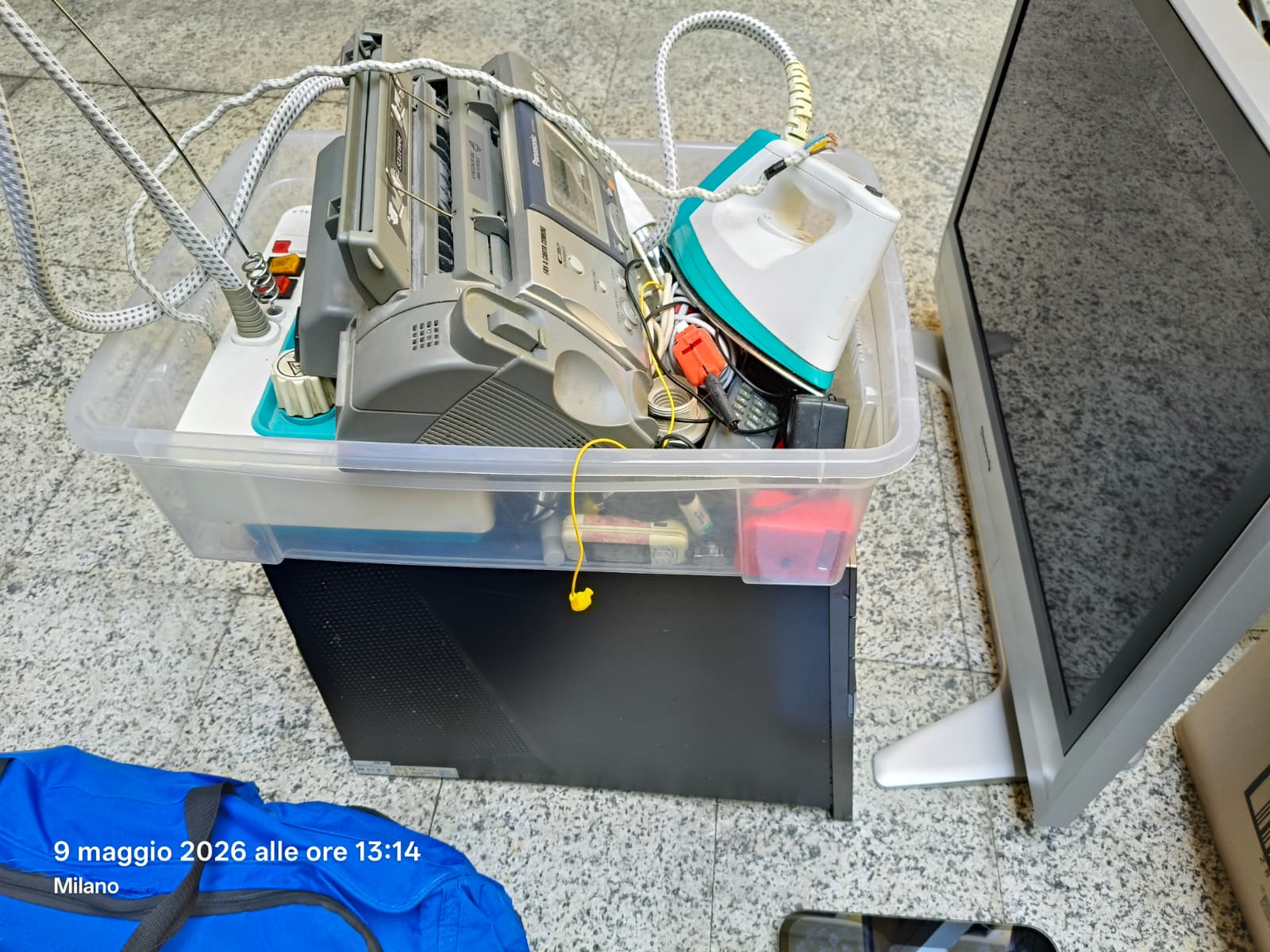
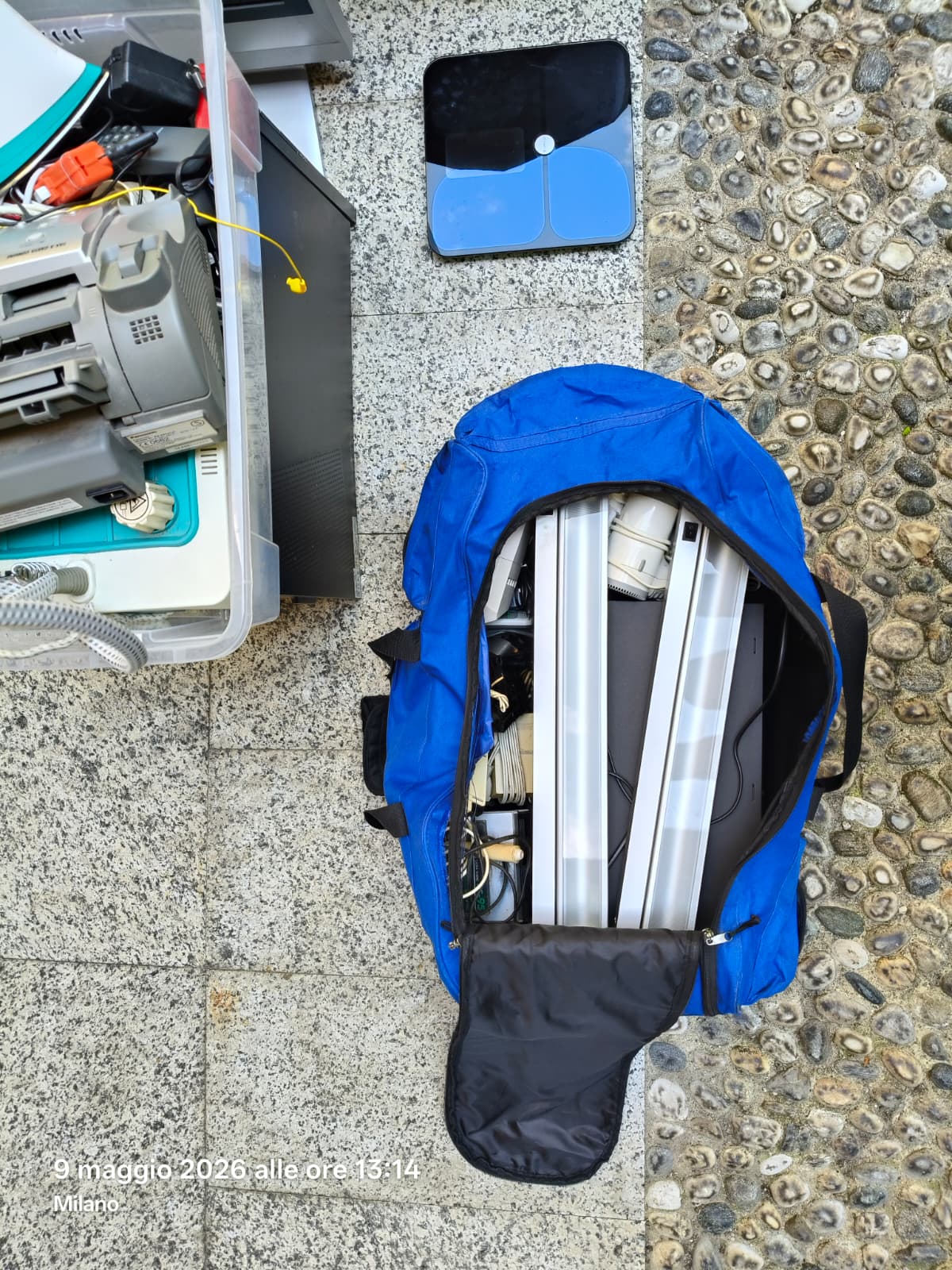
RecoServ starts from a simple question.
Why is recycling electronic devices so hard? Not for lack of willingness. 98% of Italians consider recycling important. But for lack of proximity.
RecoServ removes that distance. We bring collection where you already are: into your building's courtyard.
Discover the project → recoserv.euSB-WEEE SmartBin
The next step: install a permanent bin in your building.
Found a word you don't know?
Flip the cards.
Anything mains- or battery-powered when it stops being used. Smartphones, TVs, light bulbs, ovens, headphones, chargers. Italy produces more than 900,000 tonnes per year. Less than a third is collected properly.
Whoever makes and sells electronics in Italy pays a fee for each device placed on the market. These funds are redistributed to the municipalities that collect WEEE in a certified way. More WEEE intercepted = more funds returned.
The largest category: 134 of 138 items collected in our pilots. Smartphones, chargers, headphones, vacuum cleaners, printers, smart bulbs, small appliances. Anything below 50 cm. Hard to dispose of · easy to hoard.
The first collection event empties years of hoarding. An Italian household has on average 5–8 devices sitting at home for more than 2 years. From the second event onwards only the 'current flow' is collected: 1.5–3 kg per participant instead of 13–18 kg.
Producing recycled aluminium instead of virgin aluminium saves about 80% of the energy. Each kg of recycled copper avoids 4–5 kg of CO₂ compared with mining. WEEE is an urban mine: recovering it means not having to extract those materials elsewhere.
One tonne of smartphones contains ~300g of gold · a gold mine yields on average 1–5g per tonne of rock extracted. Smartphone circuit boards also contain silver, palladium and indium. This is why WEEE is called 'urban mining': it is richer than many mines.
European principle: whoever puts a product on the market is responsible for its end of life. Samsung, Apple, Philips and all the others pay fees to CDC WEEE for every device sold. These funds finance collection · including the RecoServ service.
Collected WEEE follows a tracked path: registered transporter → authorised plant (SISTRI/RENTRI) → material separation → foundry/refinery for metals → plastics plants. Every step is documented. Disposing of it any other way is illegal.
70% of Italians who don't recycle their WEEE cite logistic reasons: the civic amenity site is far, opening hours are inconvenient, it makes no sense to drive there for an old charger. Proximity removes that barrier. A collection point in the courtyard requires no extra effort.
Request another collection or share your opinion.
Want us back at Via Plinio? Would you like to bring RecoServ to your building? Have an idea to improve the service? Write to us below.